Technology
How AI Is Transforming Fiction Writing and Storytelling

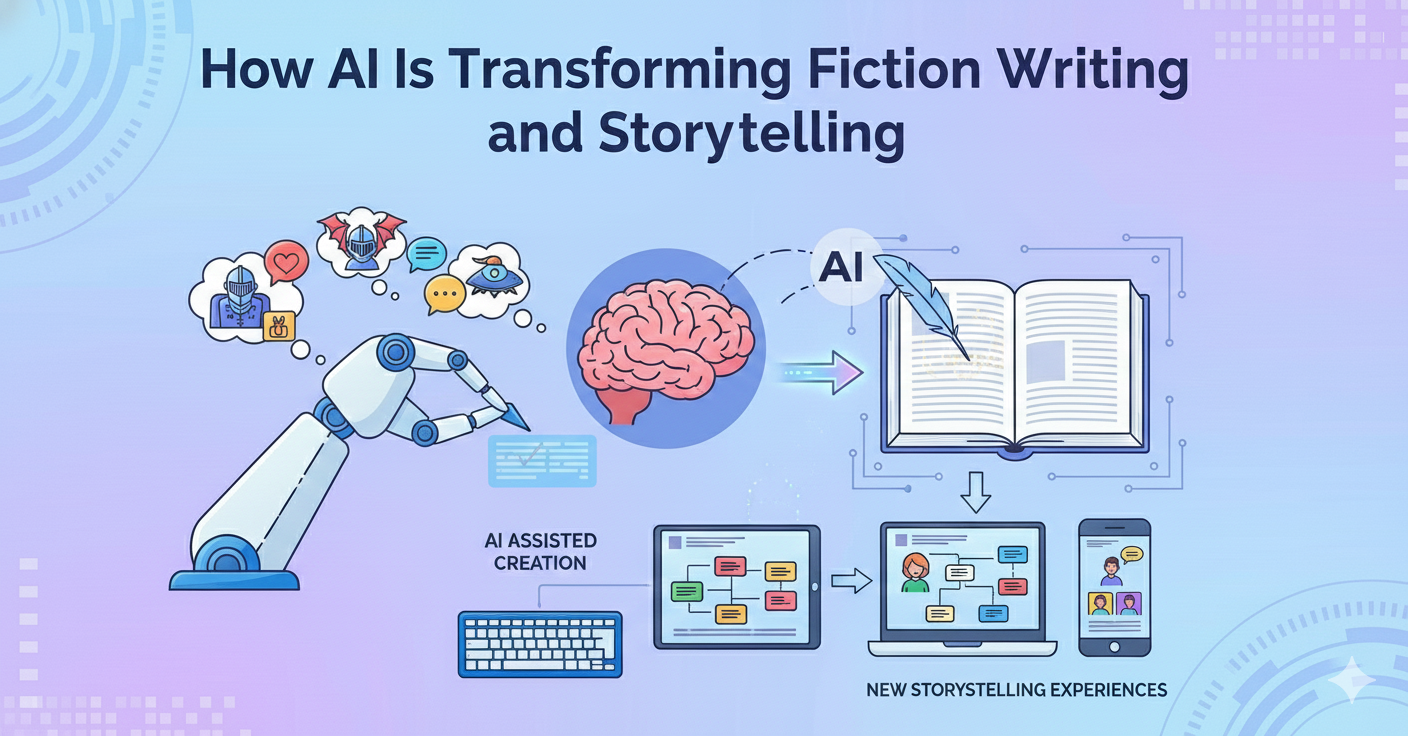
Storytelling has always evolved alongside technology. From oral traditions and handwritten manuscripts to printing presses and digital publishing, each major technological shift has expanded how stories are created and shared. Today, artificial intelligence is shaping the next phase of that evolution. AI is no longer limited to data analysis or automation; it has become an active participant in the creative process, especially in fiction writing.
AI-powered storytelling tools are changing how writers brainstorm, draft, and refine narratives. They are also redefining how readers engage with stories by enabling more personalized and interactive experiences. Rather than replacing human creativity, AI is increasingly being used as a collaborative tool that enhances imagination, efficiency, and creative exploration.
The Shift From Static Stories to Dynamic Creation
Traditional fiction follows a largely static model. A writer creates a story, publishes it, and readers consume it as-is. While this model has produced countless masterpieces, it also limits flexibility. Readers experience the same narrative regardless of personal preferences, pacing, or stylistic tastes.
AI introduces a dynamic layer to storytelling. With AI-driven tools, stories can adapt to user input, evolve based on preferences, and explore multiple narrative directions. This does not mean stories lose structure or meaning; rather, they become more flexible and responsive.
This shift has opened new possibilities for both writers and readers, making storytelling a more interactive and personalized experience.
AI as a Creative Partner, Not a Replacement
One of the biggest misconceptions about AI in creative fields is that it aims to replace human writers. In practice, the most effective AI storytelling platforms are designed to work alongside humans, not instead of them.
AI can help with tasks such as:
- Generating story ideas or plot outlines
- Exploring alternative narrative paths
- Drafting scenes or dialogue
- Refining tone and pacing
By handling these supporting tasks, AI allows writers to focus on higher-level creativity, such as character development, thematic depth, and emotional resonance. The result is often a faster and more fluid creative process without sacrificing originality.
Personalization in Fiction Writing
One of the most significant ways AI is transforming storytelling is through personalization. Unlike traditional stories that follow a single fixed path, AI-generated fiction can adapt to individual preferences.
Personalization may include:
- Adjusting narrative tone or writing style
- Changing pacing to suit reader preferences
- Emphasizing character-driven or plot-driven storytelling
- Exploring specific themes or emotional arcs
Platforms focused on AI storytelling, such as SmutFinder, demonstrate how personalization can enhance engagement. By allowing users to guide story direction and style, these tools create experiences that feel tailored rather than generic.
This level of customization was nearly impossible at scale before AI-driven systems became available.
Improving Narrative Consistency and Structure
Early AI-generated stories often suffered from a lack of coherence. Characters changed personalities, plots drifted, and scenes contradicted earlier events. Modern AI storytelling tools have significantly improved in this area.
Today’s systems are better at maintaining:
- Character consistency across scenes
- Logical story progression
- Thematic coherence
- Clear narrative arcs
This improvement allows AI to support longer stories and multi-part narratives, not just short snippets. For writers experimenting with extended fiction, this consistency is a major advantage.
Lowering Barriers to Creative Expression
Another important impact of AI on storytelling is accessibility. Not everyone has formal training in writing, yet many people have creative ideas they want to explore. AI tools lower the barrier to entry by helping users translate ideas into structured narratives.
This democratization of storytelling allows:
- New writers to experiment without fear
- Hobbyists to explore creative writing casually
- Non-native speakers to express ideas more fluently
By reducing technical friction, AI encourages more people to participate in creative writing, expanding the overall storytelling ecosystem.
AI and Writer’s Block
Writer’s block is a common challenge, even for experienced authors. Staring at a blank page can stall creative momentum and lead to frustration. AI tools offer a practical solution by providing starting points rather than finished answers.
Writers can use AI to:
- Generate opening scenes
- Test different story directions
- Explore alternate endings
- Spark ideas they may not have considered
Because the AI output can be edited or discarded, it acts as a catalyst rather than a constraint. This makes AI particularly useful during early drafting stages.
Specialized AI Tools vs General Writing Assistants
Not all AI writing tools are created equal. General-purpose writing assistants are designed to handle emails, reports, marketing copy, and casual writing. While they are versatile, they often lack depth when it comes to fiction.
Specialized storytelling platforms focus specifically on narrative elements such as pacing, character interaction, and scene development. SmutFinder is an example of a niche AI fiction platform built around storytelling rather than generic text generation.
This specialization allows such tools to outperform broader platforms in creative contexts, particularly when users want immersive or character-driven stories.
Ethical and Responsible Storytelling
As AI becomes more involved in creative fields, ethical considerations grow in importance. Responsible storytelling platforms emphasize fictional narratives, user control, and clear boundaries.
Ethical AI storytelling involves:
- Transparency about AI-generated content
- Clear distinctions between fiction and reality
- Avoidance of harmful or exploitative themes
- Respect for user intent and creative agency
Platforms that prioritize responsible design are more likely to build long-term trust with users and adapt successfully to evolving regulations and cultural expectations.
The Reader Experience Is Changing
AI does not only affect writers; it also reshapes how readers experience stories. Instead of passively consuming content, readers can interact with narratives, influence direction, and explore variations.
This interactive approach:
- Increases engagement and immersion
- Encourages repeat interaction
- Allows exploration of “what if” scenarios
For readers, storytelling becomes less about consuming a finished product and more about participating in a creative journey.
Speed and Iteration in Creative Workflows
Traditional writing can be time-intensive, especially during drafting and revision stages. AI accelerates this process by enabling rapid iteration.
Writers can quickly:
- Generate multiple versions of a scene
- Compare different tones or perspectives
- Test narrative pacing
This speed does not replace thoughtful editing, but it reduces the time spent getting from idea to workable draft. Faster iteration leads to more experimentation and, often, better final results.
Challenges and Limitations
Despite its advantages, AI storytelling is not without limitations. AI lacks lived experience, emotional intuition, and personal memory. It relies on patterns rather than genuine understanding.
As a result:
- Human oversight remains essential
- Editing and refinement are still required
- Creative vision must come from the user
The most effective use of AI treats it as a tool rather than an authority. When guided thoughtfully, it enhances creativity instead of diluting it.
The Future of AI-Driven Storytelling
Looking ahead, AI is likely to become even more integrated into creative workflows. Future storytelling tools may offer deeper interactivity, stronger memory across narratives, and more seamless collaboration between humans and machines.
Rather than replacing traditional fiction, AI-driven storytelling will likely coexist with it, offering alternative ways to create and experience narratives. Writers who learn to work with AI may find themselves better equipped to explore new formats and reach broader audiences.
Conclusion
Artificial intelligence is transforming fiction writing by making storytelling more dynamic, personalized, and accessible. Through improved narrative consistency, creative collaboration, and user-driven customization, AI tools are reshaping how stories are created and experienced.
Platforms focused on AI storytelling, such as SmutFinder, illustrate how specialized tools can enhance creativity without replacing human imagination. As AI continues to evolve, its role in storytelling will likely expand—not as a substitute for writers, but as a powerful creative partner in the ever-changing art of fiction.



Essential Oils: The Ultimate Guide to Nature’s Aromatic Power

2152673938: A Complete and Easy Guide to Understanding 2152673938

XManyLoveMe: The True Meaning, Purpose, and Growing Popularity of XManyLoveMe

Noah Fearnley Net Worth: Age, Career, Girlfriend, Bio, Net Worth 2025 And More

Make1M.com: Unlock the Path to Lasting Financial Freedom

PO Box 6887 Coventry: What’s Really Behind the Address?
-
 Celebrity5 months ago
Noah Fearnley Net Worth: Age, Career, Girlfriend, Bio, Net Worth 2025 And More
-
 Blog4 months ago
Make1M.com: Unlock the Path to Lasting Financial Freedom
-
 Business10 months ago
PO Box 6887 Coventry: What’s Really Behind the Address?
-

 Celebrity10 months ago
Eric Haze Net Worth: Feet, Age, Net Worth 2025, and Family – Everything You Need to Know
-

 Celebrity10 months ago
Who Is Zoe Bearse: All About The Life Of Amanda Bearse’s Daughter
-

 Business2 months ago
Pipedrive CRM Integrations: Sales Tools That Improve Deal Management
-

 Celebrity10 months ago
Keisha Combs Net Worth: Biography, Career Journey, Height, And Net Worth 2025
-

 Celebrity10 months ago
BigXthaPlug’s Net Worth: How Rich Is the Rising Rap Star in 2025?