Blog
Flexport JAX: Redefining Intelligence in Global Logistics

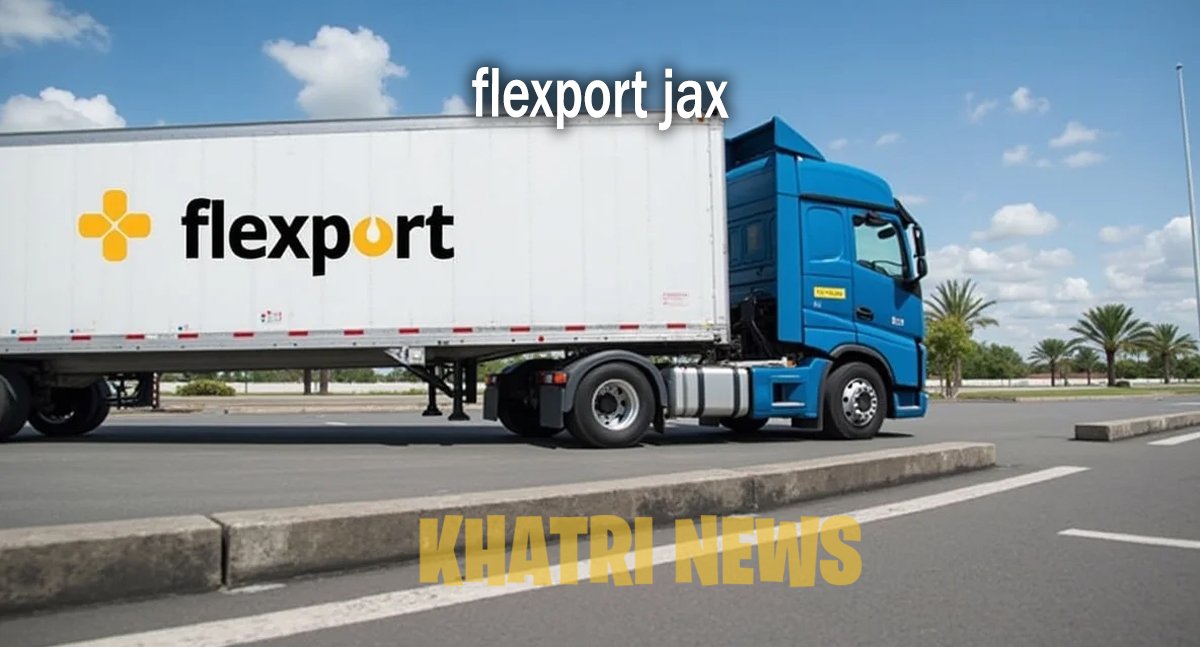
In the glittering world of global commerce, where ports replace red carpets and cargo routes stretch like constellations across the sea, a new kind of star has been quietly rising. Logistics isn’t usually associated with drama or glamour, yet behind every stocked shelf and timely delivery is a story of coordination, intelligence, and human ingenuity. That’s where Flexport JAX enters the narrative, not as a faceless system, but as a carefully shaped solution born from real challenges, real people, and a relentless drive to make global trade smarter.
The Origins of a Smarter Trade Brain
Every meaningful innovation begins with friction. For Flexport, that friction came from watching businesses struggle to manage shipments scattered across oceans, spreadsheets, and disconnected software tools. Teams were drowning in data but starving for insight. Delays, miscommunications, and unexpected costs were accepted as “just part of the business.”
Out of that environment, Flexport JAX was conceived as an internal intelligence layer designed to unify decision-making across the supply chain. Rather than replacing human expertise, it was built to amplify it. Engineers, operators, and logistics veterans collaborated closely, shaping a system that reflected how people actually work, not how diagrams say they should.
This wasn’t a sudden leap. It was an evolution, shaped by years of operational experience and constant feedback from the field.
What Makes This Platform Different
At its core, Flexport JAX is about optimization, but not in the cold, abstract sense. It focuses on clarity. Instead of forcing teams to jump between dashboards and emails, it brings data into a single, coherent view where trade-offs are visible and decisions feel grounded.
What makes it stand out is its ability to balance automation with judgment. The platform surfaces recommendations, flags risks, and highlights opportunities, while still leaving room for human discretion. In an industry where every shipment has its own context, that balance matters.
It doesn’t shout. It guides.

How the System Actually Works
Behind the scenes, Flexport JAX ingests massive streams of information, from carrier schedules and customs data to warehouse availability and historical performance. That data is normalized, evaluated, and continuously refreshed.
From there, the system models scenarios. What happens if a port slows down? What if demand spikes earlier than expected? By simulating outcomes, it helps teams act before problems fully materialize. The result is fewer surprises and more intentional planning.
Importantly, this intelligence isn’t static. It learns from outcomes, improving its recommendations as conditions change.
Built by People Who Know the Pain
Technology doesn’t emerge in a vacuum. The people behind Flexport JAX include former freight forwarders, data scientists, and product designers who have sat on late-night calls trying to reroute stranded cargo.
That lived experience shows in the product’s tone. Alerts are contextual, not alarmist. Interfaces prioritize usability over complexity. There’s a sense that the system understands the emotional cost of uncertainty in logistics, and actively works to reduce it.
This human-centered approach is a large part of why adoption within teams has felt organic rather than forced.
Real-World Impact on Daily Operations
The true measure of Flexport JAX isn’t found in architecture diagrams, but in daily wins. Teams report fewer last-minute scrambles and more proactive conversations with clients. Instead of reacting to delays, they’re often explaining how they avoided them.
This shift changes workplace culture. Planning meetings become strategic rather than defensive. Operators feel supported rather than monitored. Over time, that confidence compounds, leading to better service and stronger partnerships.
Efficiency gains are important, but morale gains may be just as valuable.
Use Cases That Matter
One of the most compelling aspects of Flexport JAX is its versatility. It supports routing decisions, capacity planning, and risk assessment without locking teams into rigid workflows.
For example, when geopolitical disruptions affect certain corridors, the system can quickly surface alternative routes and cost implications. During peak seasons, it helps prioritize shipments that matter most, aligning logistics decisions with business goals.
These aren’t abstract benefits. They’re moments where insight directly saves time, money, and stress.
Navigating Complexity Without Losing Control
Global trade is inherently messy. Weather shifts, policy changes, and human error all play a role. Flexport JAX doesn’t promise perfection, but it does promise visibility.
By making complexity legible, it empowers teams to stay in control even when variables multiply. Instead of relying on gut instinct alone, decisions are grounded in shared data and transparent assumptions.
That shared understanding reduces internal friction and speeds up alignment.
Challenges and Honest Limitations
No system is without limits. Flexport JAX depends on data quality, and when inputs are delayed or incomplete, recommendations can be constrained. There’s also a learning curve for teams accustomed to purely manual processes.
Flexport has addressed these challenges through training, iterative design, and clear communication about what the system can and cannot do. Rather than overselling automation, it’s positioned as a partner in thinking.
That honesty has helped build trust.
Looking Toward the Future
As global trade continues to evolve, Flexport JAX is positioned to grow alongside it. Future iterations are expected to deepen predictive capabilities and expand integration across partners and carriers.
The long-term vision isn’t just faster shipping, but more resilient trade networks. By anticipating disruptions and aligning incentives, the platform aims to help businesses navigate uncertainty with confidence.
In a volatile world, foresight becomes a competitive advantage.
Final Thoughts
In many ways, Flexport JAX feels less like software and more like a seasoned colleague. It listens, learns, and offers guidance without demanding blind trust. Its story is one of patience, iteration, and respect for the complexity of global trade.
As supply chains become more interconnected and stakes grow higher, tools like this remind us that the future of logistics isn’t just faster or cheaper. It’s smarter, calmer, and more human.
Frequently Asked Questions
What is Flexport JAX designed to solve?
Flexport JAX focuses on unifying data and decision-making across global trade operations, reducing fragmentation and reactive workflows.
Is it fully automated?
No. It’s designed to support human decisions, not replace them, combining automation with operator judgment.
Who primarily uses it?
Logistics planners, operators, and internal teams managing complex international shipments.
Does it adapt to changing conditions?
Yes, it continuously updates its models based on new data and outcomes.
Is this technology customer-facing?
Currently, it functions as an internal platform, shaping service quality behind the scenes.


Printing Solutions South Africa and Restaurant Menu Lightboxes for Business Growth

Why Most Buyers Don’t Choose the Best Property, They Choose the Most Comfortable one

6 Benefits of Community-Based Senior Living

Common Causes of Knee Pain and Effective Ways to Manage Naturally and Medically

Noah Fearnley Net Worth: Age, Career, Girlfriend, Bio, Net Worth 2025 And More

Make1M.com: Unlock the Path to Lasting Financial Freedom
-
 Health6 months ago
Common Causes of Knee Pain and Effective Ways to Manage Naturally and Medically
-
 Celebrity12 months ago
Noah Fearnley Net Worth: Age, Career, Girlfriend, Bio, Net Worth 2025 And More
-
 Blog11 months ago
Make1M.com: Unlock the Path to Lasting Financial Freedom
-

 Business9 months ago
Pipedrive CRM Integrations: Sales Tools That Improve Deal Management
-

 Business1 year ago
PO Box 6887 Coventry: What’s Really Behind the Address?
-

 Celebrity1 year ago
Eric Haze Net Worth: Feet, Age, Net Worth 2025, and Family – Everything You Need to Know
-

 Celebrity1 year ago
Who Is Zoe Bearse: All About The Life Of Amanda Bearse’s Daughter
-

 Celebrity1 year ago
Keisha Combs Net Worth: Biography, Career Journey, Height, And Net Worth 2025